How to Write a Dialogue for Kids
Three rules make a child’s dialogue readable: put spoken words inside quotation marks, start a new paragraph when the voice changes, and connect each reply to the previous line. Six to ten lines are enough to practise turn-taking, punctuation, and natural speech. Give the exchange one purpose—asking for help, settling a disagreement, or planning a game. Saying both roles aloud before writing exposes disconnected responses and keeps the scene focused.
📥 How to Write a Dialogue for Kids
Plan, punctuate, write, and improve conversations that sound natural.
Leave your email — we'll send the PDF to your inbox.No spam — the PDF plus one short reminder. Unsubscribe anytime.
What Children Need to Understand
Dialogue is a written conversation between two or more people, not a record of every sound. Writers select lines that reveal information, express feelings, or move the scene forward. Each participant needs a goal.
Before writing, ask: Who is speaking? Where are they? What do they want? Two friends might choose a game, a learner might request help, or an explorer might meet a robot. One goal focuses the conversation.
During LearnLink lessons, tutors use role-play to connect spoken and written English. When using How to Write a Dialogue for Kids: A Practical Guide at home, let your child act out both roles. Hearing the conversation makes it easier to write.
Punctuation and Grammar Rules
In English dialogue, quotation marks enclose the speaker’s exact words. How to Write a Dialogue for Kids: A Practical Guide uses double quotation marks, although certain schools and publishers prefer single marks. Either system works when opening and closing marks match and the style remains consistent.
A comma separates a statement from its dialogue tag: “We can start now,” said the learner. A question mark or exclamation mark replaces the comma when needed: “Where is the map?” asked the partner. The tag starts with a lower-case letter because the sentence continues.
The punctuation system in How to Write a Dialogue for Kids: A Practical Guide shows where speech begins, ends, and changes hands. Children need few dialogue tags. Once readers know the speakers, remove repeated uses of “said.”
A Step-by-step Writing Method
How to Write a Dialogue for Kids: A Practical Guide separates planning from punctuation. Inventing a scene, choosing words, and checking every comma at once can make a child lose the conversation’s thread.
- Choose the characters and setting. Write one short note, such as “two friends at a playground.”
- Give the scene a goal. One friend wants to choose a game; the other has a different idea.
- Say the exchange aloud. Check that each reply connects to what was just said.
- Draft one voice at a time. Begin a new paragraph whenever the voice changes.
- Edit after drafting. Check quotation marks, capital letters, end punctuation, and dialogue tags.
Natural dialogue is shorter than formal prose. Contractions such as “I’m,” “we’ll,” and “can’t” suit speech. Brief answers can sound natural: “Not yet,” “Of course,” or “After lunch.” Their meaning must remain unambiguous.
When children use How to Write a Dialogue for Kids: A Practical Guide, have them read the exchange with a partner. Revise any line that is awkward to say or fails to answer the previous line. Reading aloud exposes missing words.
Examples for Different Ages and Goals
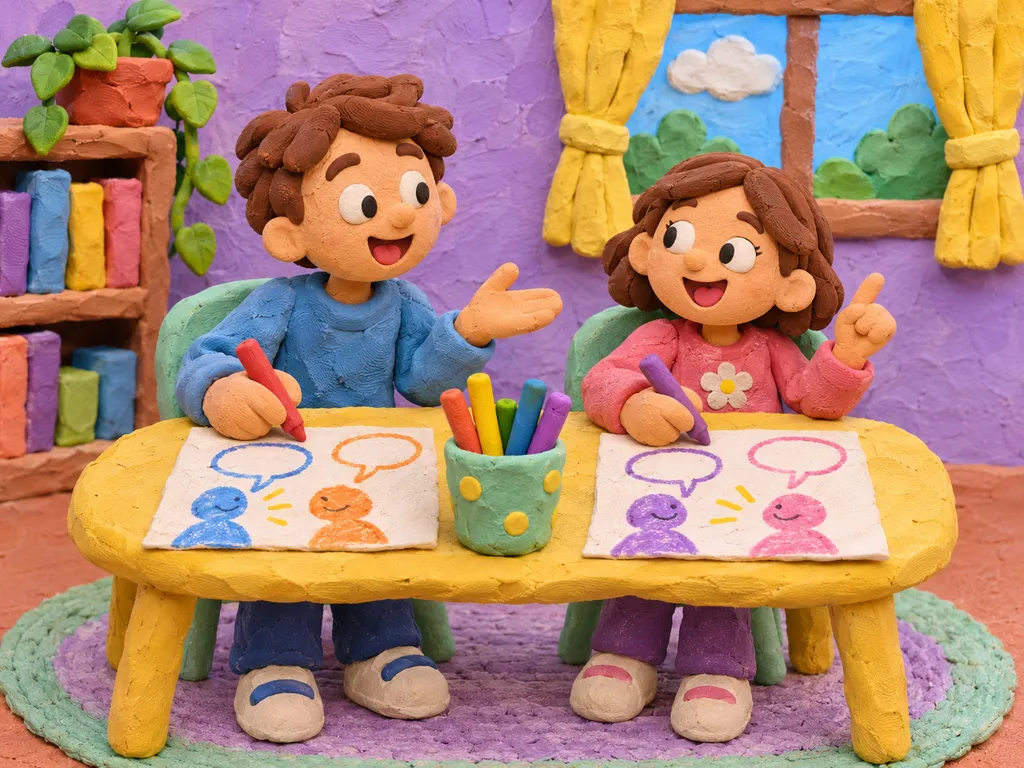
The task can grow with the writer. Younger children may dictate a brief exchange; older learners can add conflict, reasons, and shifts in tone. The goal is effective communication, not page length.
- School-age kids: Use two lines with a clear request and reply.
“May I have the green block?”
“Yes. Here you are.” - School-age kids: Add a reason and a follow-up question.
“Shall we draw a castle?”
“Can we draw a spaceship instead? I want to add an alien.”
“Good idea. Which planet should we use?” - School-age kids: Let each speaker have a different view.
“We should take the shorter path.”
“It is quicker, but the sign says it closes at sunset.”
“Then let’s check the time before we decide.”
Dialogue may sound informal without becoming confusing. Speakers can pause, change direction, or use fragments. During early practice, complete sentences simplify punctuation. Introduce interruptions and unfinished speech after the child masters the layout.
The examples in How to Write a Dialogue for Kids: A Practical Guide are models, not scripts. Your child can change the setting, roles, and goal while retaining the pattern: an opening line, connected reply, and next step.
Common Mistakes and How to Fix Them
Most dialogue problems involve layout, punctuation, or disconnected replies. Correct one error type at a time. Too many marks can obscure the lesson and discourage revision.
- Two speakers share one paragraph. Start a new paragraph each time the voice changes.
- Quotation marks are missing or unmatched. Point to the first and last spoken word, then add a mark at each end.
- Every line uses a tag. Remove tags when the order of speakers already makes the meaning clear.
- The reply ignores the question. Ask the child to say what the second speaker heard before rewriting the answer.
- Actions are punctuated as dialogue tags. Write the action as its own sentence: The learner opened the box. “What is inside?”
Writers may choose a new verb for every line: exclaimed, announced, declared, or shouted. Plain “said” and “asked” read better. An action can convey mood without an elaborate tag: The player folded the map. “I think we missed the turn.”
Check meaning before commas. Perfect punctuation cannot repair a purposeless conversation. Ask what changes between the first and last line. A speaker might receive an answer, accept a plan, solve a problem, or choose the next action.
Practice Activities at Home or in Class
To apply How to Write a Dialogue for Kids: A Practical Guide, keep practice brief and focused. Use separate exercises for punctuation, connected replies, and independent writing. Let your child finish the draft before discussing corrections.
1. Add Punctuation
Rewrite these lines with capitals, quotation marks, and correct end punctuation:
can we build a kite asked the learner
yes after lunch replied the adult
Correct version: “Can we build a kite?” asked the learner. “Yes, after lunch,” replied the adult. The question mark stays inside the quotation marks; the statement takes a comma before its tag.
2. Make the Reply Connect
Complete the exchange with a direct answer and one extra detail:
“Which book should we read?”
“____________________________”
Possible answer: “Let’s read the book about the moon because we have not finished it.” Any answer works if it names a book or choice and answers the question.
3. Write a Four-line Dialogue
Choose two roles: a shopkeeper and a customer, two teammates, or an inventor and a robot. Give one speaker a request. Write four connected lines, start a new paragraph for each speaker, and use at least one question.
Review the dialogue with four checks: readers can identify the speakers, each reply connects, quotation marks are paired, and the scene reaches a result. Correct errors without replacing your child’s ideas with adult wording.
When a word has several meanings or pronunciations, Cambridge Dictionary is a useful check before turning it into child-friendly examples.
Frequently Asked Questions
How Long Should a Child’s First Dialogue Be?
A first dialogue can be six to ten lines—enough to practise speaker changes, quotation marks, and connected replies without creating a long story. A younger child may start with two or four lines. Add length when the exchange stays focused and the child can review it.
Should Dialogue Grammar Always Be Complete?
Not every spoken line needs a complete sentence. Replies such as “Not now,” “Maybe tomorrow,” and “Of course” communicate full ideas. Start with complete structures while your child learns punctuation. Introduce fragments when they suit the speaker and preserve meaning.
How Can I Help Without Writing the Dialogue Myself?
Ask your child to act out the scene, then prompt: Who speaks first? What does the speaker want? Does the reply answer the question? Identify a place to check instead of supplying a finished line. Your child retains ownership of the ideas and wording.
Does Every Line Need “Said” or “Asked”?
No. Use a dialogue tag when readers might not know who is speaking. In a two-person exchange, paragraph changes often establish the order. Actions can identify a speaker. Keep “said” and “asked” where needed; remove tags that add no information.
How Often Should Children Practise Dialogue Writing?
How to Write a Dialogue for Kids: A Practical Guide suits short sessions. One or two focused dialogues each week provide practice when your child reads and revises them. Focus matters more than frequency: choose one skill, such as paragraph changes or question punctuation, and check it.
If your child needs steady speaking practice, start small — choose a trial lesson.
Stay updated on our latest tips and resources by following us on Instagram LearnLink.